
What Size Piano Fits Your Home?
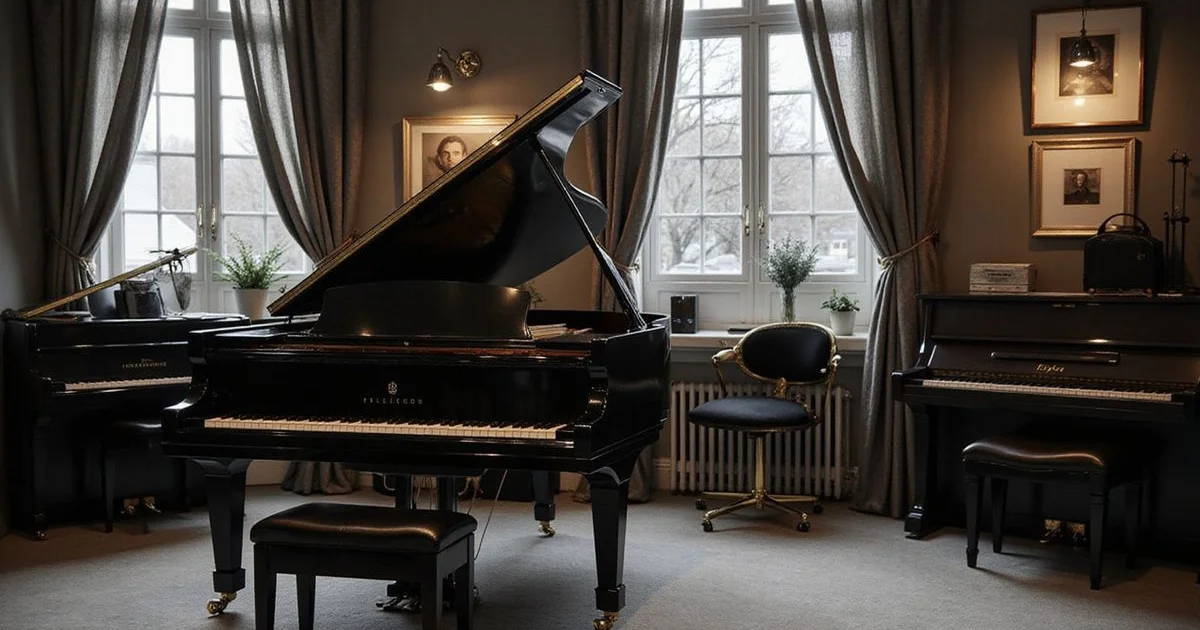
Choosing a piano is a significant decision, and one of the most common questions we hear at our showroom on Montpellier Parade in Harrogate is about finding the right fit. You know how the character of North Yorkshire homes varies so much, from compact Victorian terraces to sprawling rural properties. This variety is precisely why a one-size-fits-all approach doesn’t work.
As a qualified technician with 20 years of experience, our lead technician, James Whitmore, helps families, schools, and discerning buyers find the right instrument without sales pressure. We are authorised Yamaha and Kawai dealers, and James prepares every single instrument before it is delivered.
This guide will walk you through the practical steps of measuring your space and understanding the different piano sizes available. We will also cover the crucial, but often overlooked, aspects of acoustics and aftercare that ensure your piano sounds its best for years to come.

From our Harrogate showroom
We are authorised Yamaha and Kawai dealers. Every instrument is prepared by James before delivery.
Practical guidance
You may also find our guide on How Much Does a New Piano Cost in Yorkshire? helpful. Finding the right piano involves more than just picking a model you like the look of. Our experience has shown that a little preparation makes the selection process much smoother and more successful. Whether you are comparing options or ready to visit, we recommend starting with New Piano Sales for an overview of how we work. James prepares every piano before delivery, and we offer free delivery within 30 miles of Harrogate.
Here’s a breakdown of the key considerations.
| Consider | Typical Approach | Keys & Co Guidance |
|---|---|---|
| Budget | Set a realistic range before visiting. | Uprights from £2,500; pre-owned from £800. Remember to factor in future tuning costs. |
| Space | Measure the room’s length and width. | Bring your measurements to us. Our private viewing rooms let you try before you buy in a space that mimics a home environment. |
| Aftercare | Plan for tuning twice yearly. | A standard tuning visit is £85. We also advise on humidity control, which is vital for protecting your investment. |
Understanding Piano Dimensions
The first step is to get familiar with the common sizes. While all pianos have a similar width to accommodate the 88 keys, typically around 150cm (5 feet), their height (for uprights) and length (for grands) vary significantly.
-
Upright Pianos: These are the most common choice for homes due to their smaller footprint. They are designed to be placed against a wall. Their height is the key measurement, as it affects the length of the strings and the size of the soundboard, which in turn determines the richness of the tone.
- Console: 101-111 cm (40-44 inches) tall. A good option for smaller rooms.
- Studio: 114-121 cm (45-47 inches) tall. Often chosen by students and teachers. The popular Yamaha U1 is 121cm tall.
- Professional: 122-132 cm (48-52 inches) tall. These offer a depth of tone comparable to a small grand piano. The Kawai K-300, for example, stands at 122cm.
-
Grand Pianos: These require much more floor space as the strings are horizontal. Their size is measured by their length, from the front of the keys to the end of the tail.
- Baby Grand: 150-170 cm (5’ to 5’7”). The most popular size for homes.
- Medium Grand: 170-185 cm (5’7” to 6’1”). Offers a good balance of size and sound for larger rooms.
- Professional/Full Grand: 185-213 cm (6’1” to 7’). Ideal for advanced players and spacious music rooms.
Matching the Piano to Your Room’s Acoustics
A piano that is too large for a room can sound overpowering or “muddy,” while one that’s too small can sound thin. The acoustics of your room are just as important as the dimensions.
A simple test is to stand in the middle of the room and clap your hands loudly. If you hear a long echo, the room is “live” and has many hard surfaces like hardwood floors and large windows. In this case, a smaller piano might be better, or you could add soft furnishings like rugs and curtains to absorb some of the sound. If the clap sounds short and sharp, the room is “dead” and can likely handle a larger, more powerful instrument.
What to do next
North Yorkshire homes vary, from Victorian terraces in Harrogate with living rooms around 15-20m², to larger detached rural properties that might have living spaces exceeding 30m². Room size, humidity, and how often the piano will be played all matter.
When you measure your space, don’t forget to account for access. Will the piano fit through doorways, hallways, and any tight corners or staircases? It’s a practical step that is often overlooked. We also recommend leaving a few inches of space between the back of an upright piano and the wall to allow the sound to project properly.
The biggest enemy of a piano, especially in the UK’s variable climate, is fluctuations in humidity. The ideal relative humidity for a piano is between 45% and 70%. We strongly recommend purchasing a small digital hygrometer to monitor the conditions. In winter, central heating can dry the air out, causing wooden parts to shrink. A simple solution can be adding a houseplant to the room. For more persistent issues, a dedicated piano climate control system, such as the Dampp-Chaser, can be fitted. An upright system costs around £450-£495 and offers excellent protection.
Ready to try some pianos in person? Bring your room dimensions to your visit, and we will help you shortlist uprights and grands that fit your space and budget. Our price guide runs from £800 for quality pre-owned instruments to £45,000 for premium grands.
Visit us Tuesday to Saturday or book a showroom viewing.
Ready to take the next step?
Learn more about New Piano Sales →