
New Acoustic Piano vs Digital Piano

Choosing a piano is a big decision, and we find many people start by weighing up the classic acoustic versus the modern digital. You see the debate online, but it often misses the practical realities for your home. As a team led by James Whitmore, a qualified technician with 20 years of experience, we help families and schools across Harrogate find the right instrument without any sales pressure.
Our work is about matching a piano to a person and a space.
From our showroom on Montpellier Parade, we want to share some honest, practical guidance on the real-world differences we see every day.
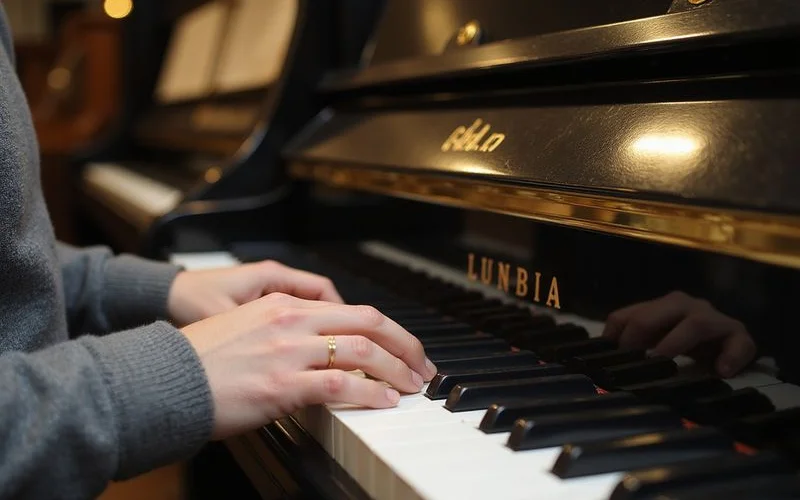
From our Harrogate showroom
We are authorised Yamaha and Kawai dealers. Every instrument is prepared by James before delivery.
The Feel: The Connection to the Music
The way a piano feels under your fingers is where the acoustic vs digital piano debate truly begins. An acoustic piano has a complex mechanical action, with thousands of moving parts connecting the key to a felt-covered hammer that strikes a string. This physical connection is what gives it a nuanced and expressive response.
A digital piano aims to replicate this feel. Top models from brands like Yamaha and Kawai have become incredibly sophisticated. For example, Yamaha’s Clavinova series uses graded hammer actions like GrandTouch-S, which mimics the way bass keys feel heavier than treble keys. Kawai’s digital pianos often feature their Grand Feel III wooden-key actions, providing a remarkably authentic touch. For those who want the best of both worlds, hybrid pianos like the Yamaha AvantGrand series incorporate a genuine acoustic piano action for an unmatched playing experience, just without the strings.
The Sound: Authenticity vs. Versatility
Acoustic pianos create sound organically. The vibrations of the strings resonate through the soundboard, producing a rich, complex tone that can’t be perfectly replicated. Every acoustic piano has its own unique voice.
Digital pianos produce sound using high-quality recordings, or ‘samples’, of world-class concert grand pianos. Top-tier digital instruments from Yamaha feature samples from their flagship CFX concert grand, while premium Kawai models use sounds from the renowned Shigeru Kawai SK-EX. The major advantage of a digital piano is its versatility. You can switch between different piano tones, play with headphones for silent practice, and never worry about tuning. Many models now include advanced features like Binaural sampling, which creates an immersive, three-dimensional sound experience when using headphones.
Maintenance and Long-Term Value
When thinking about cost, it’s helpful to look beyond the initial purchase price. An acoustic piano requires regular care to sound its best.
- Tuning: We recommend tuning a new piano twice in its first year and then annually.
- Regulation: Over time, the action may need adjusting to maintain its responsiveness.
- Lifespan: A well-maintained acoustic piano can last for over 50 years and often becomes a family heirloom, holding its value remarkably well.
A digital piano, on the other hand, has virtually no maintenance costs beyond a bit of dusting. Its value is tied to its technology, which means it depreciates much like other electronic goods. While a high-end digital piano from five years ago is still a fine instrument, it will have lost a significant portion of its original value.
Practical guidance
You may also find our guide on Yamaha vs Kawai: Which Brand Is Right for You? helpful. Whether you are comparing options or are ready to visit, we recommend starting with our guide to New Piano Sales for an overview of how we work. James prepares every piano before it leaves our showroom, and we offer free delivery within 30 miles of Harrogate.
Here is a quick look at the key practical considerations.
| Consider | Typical approach | Keys & Co |
|---|---|---|
| Budget | Set a realistic range before visiting | Uprights from £2,500; pre-owned from £800 |
| Space | Measure room length and width | Private viewing rooms, try before you buy |
| Aftercare | Plan for tuning twice yearly | £85 standard tuning visit |
A crucial factor often overlooked is weight and placement. A typical upright acoustic piano can weigh over 200kg, requiring specialist movers and careful thought about floor support, especially in older Victorian or Georgian homes common in North Yorkshire. They are also sensitive to changes in temperature and humidity and should be placed against an internal wall, away from radiators and direct sunlight. A digital piano is much lighter, often under 80kg, and can be placed anywhere in a room.
What to do next
North Yorkshire homes vary, from Victorian terraces in Harrogate to larger rural properties in the Dales. The size of your room, its humidity, and how often the piano will be played all influence the best choice for you.
We suggest you bring your room dimensions with you when you visit. This information will help us shortlist uprights and grands that fit your space and budget. Our price guide runs from £800 for quality pre-owned instruments to £45,000 for premium new grand pianos. The best way forward is always to play the instruments for yourself.
Ready to try a few pianos in person? Visit us Tuesday to Saturday, or book a showroom viewing to ensure you have a private space to play.
Ready to take the next step?
Learn more about New Piano Sales →