
Upright vs Grand Piano: Which Is Right for Your Home?
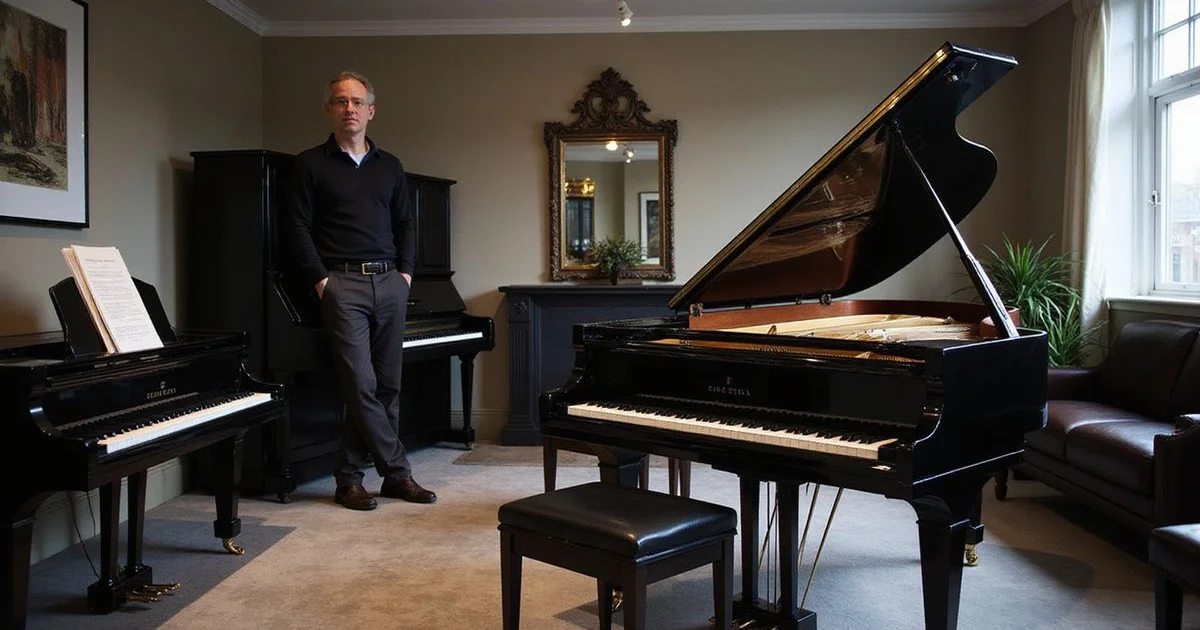
Choosing between an upright and a grand piano often feels like a significant decision. You know that a grand piano makes a statement, but the real question is whether it’s the right choice for your home, your music, and your budget.
As qualified technicians with 20 years of experience at Keys & Co on Montpellier Parade in Harrogate, we help families and discerning buyers find the right instrument without any sales pressure. We believe the best choice comes from understanding the practical differences.
This guide will walk you through the key considerations. We will compare the sound and touch, the actual space required, the typical budget for each, and the long-term aftercare.
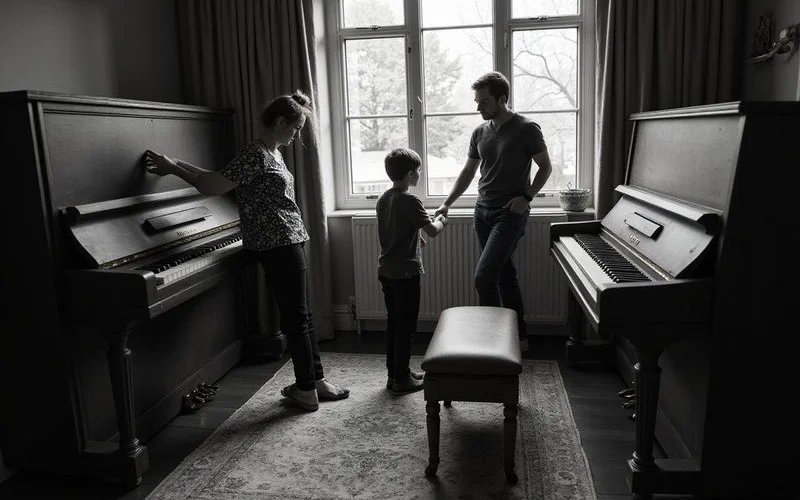
From our Harrogate showroom
We are authorised Yamaha and Kawai dealers. Every instrument is prepared by our technician, James Whitmore, before delivery.
Practical Guidance: A Direct Comparison
Whether you are just starting to compare options or are ready to visit a showroom, we recommend starting with our piano buying guides for an overview of how we work. You may also find our guide on How to Choose Your First Piano helpful.
Here’s a look at how we approach the key decision-making factors.
| Consideration | Upright Piano | Grand Piano |
|---|---|---|
| Sound & Touch | Vertical action with springs; a more compact sound. | Horizontal action using gravity; offers a richer tone and faster key repetition. |
| Space Needed | Sits flat against a wall; typically 150cm wide and 60cm deep. | Requires significant floor space, a 150cm “baby grand” needs about a 2m x 2m area. |
| Typical Budget | New from £2,500; quality pre-owned from £800. | New baby grands from £9,000; pre-owned can be found from £5,000. |
| Aftercare | Standard tuning costs around £85-£90. | Similar tuning costs, but major repairs can be more complex. |
Sound and Touch: More Than Just Size
The most significant difference lies in the piano’s “action”, the internal mechanism that connects the key to the hammer that strikes the string.
An upright piano has a vertical action. The hammers rely on springs to return to their resting position, which is a marvel of compact engineering. However, a grand piano’s action is horizontal, using gravity to return the hammer. This allows for faster repetition, with some grands capable of repeating a note up to 14 times per second, compared to around 7 for an upright. This gives the player greater control over dynamics and expression.
The length of the strings and the size of the soundboard also play a crucial role. A grand piano’s longer strings produce a richer, more resonant tone. While a high-end upright like a Yamaha U1 can outperform an entry-level baby grand, a quality grand piano will almost always offer superior tonal depth.
Space and Placement: How Much Room Do You Really Need?
Many people overestimate the space needed for an upright and underestimate it for a grand.
- Upright Pianos: These are the space-savers. A typical upright, such as a Kawai K-300, is about 122cm tall and 61cm deep. They are designed to sit flat against a wall, making them suitable for most rooms, from Victorian terraces in Harrogate to modern apartments.
- Grand Pianos: A “baby grand” is the smallest in the category, usually starting around 150cm (just under 5 feet) in length. While compact for a grand, it still requires a significant footprint. As a rule of thumb, you need at least a 2m x 2m square of clear space to comfortably house even a small baby grand and its bench. It’s also vital to consider access, measuring not just the room but also doorways and stairwells.
Budget and Value: New, Pre-Owned, and Long-Term Investment
Pianos hold their value remarkably well, especially reputable brands like Yamaha and Kawai.
Our prices range from £800 for quality pre-owned uprights to over £45,000 for premium new grand pianos. A new professional-grade upright like a Kawai K-300 can be found for under £5,000, while a new Yamaha U1 might be closer to £8,000 or £9,000. Entry-level baby grands from these brands, such as the Yamaha GB1K, start at just under £10,000.
A well-maintained pre-owned piano from a top-tier brand is often a better investment than a new instrument from a lesser-known maker. Yamaha U-series uprights, in particular, are known for their durability and are excellent instruments when professionally reconditioned.
Aftercare and Maintenance
Both upright and grand pianos need regular tuning, ideally twice a year, to keep them at the correct pitch and protect their structural integrity. A standard tuning visit in the North Yorkshire area typically costs between £70 and £90. If a piano hasn’t been tuned for several years, it may require a “pitch raise,” which costs more.
It is also wise to position your piano away from direct sunlight, radiators, and draughty areas to maintain its tuning stability. Keeping the room’s humidity between 40-50% is ideal for the health of the instrument.
What to Do Next
Ultimately, the best way to decide is to try them in person. The feel of the action and the character of the tone are deeply personal choices.
We invite you to our Harrogate showroom, where you can compare different upright and grand pianos in our private viewing rooms. Bring your room dimensions, and we can help you find the perfect instrument that fits your space, your budget, and your musical aspirations.
You can visit us from Tuesday to Saturday, or feel free to book a showroom viewing to ensure dedicated time with James.
Ready to take the next step?
Learn more about Guides →